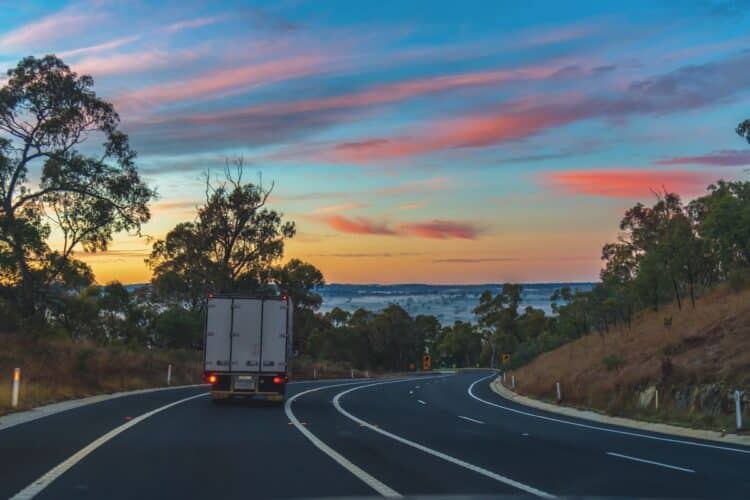
SCULLY RSV - Prime Mover Magazine December Edition — CFO Roundtable
Weathering the Storm
As Australia’s transport and logistics sector prepares for a transformative 2026, several leaders across industry segments were invited to share their thoughts on what they expect from the next 12 months, how they have adapted and the challenges they have been preparing for.
Mark Muscat began his professional career at global accounting giant KPMG in Melbourne, where he worked with a range of corporate clients including logistics powerhouse Toll Group.
That exposure sparked a passion for transport that ultimately defined his career path.
“Through Toll Group being one of my clients at KPMG, I took a keen interest in transport,” he says.
“After seven years at the firm, I joined Toll as the Finance Manager of their IPEC business. That role was the start of my journey in the transport industry.”
At Toll, Mark gained extensive experience across a variety of commercial and operational roles within the business. By the time he met Aaron Cole, co-owner of Josie’s Transport, and stepped into the role of Chief Financial Officer, he had developed a unique perspective of what it takes to operate a successful transport business.
“My different experiences in this space have equipped me with a deep understanding of what it takes to make a transport operation successful,” he explains.
“I’ve learned that looking at the numbers is only part of the story. You can look at a profit and loss statement and make numeric suggestions, but it is imperative to understand the challenges with a workforce, on the front line.”
Scully RSV CFO, Mitchell Kilkeary has enjoyed an eclectic career to date. His formative years saw him developing business acumen at two leading global professional service firms before moving into commerce.
This took Mitchell to London for three years before returning back to Brisbane with a head of finance role at a private equity firm.
“I was in private equity for over four years and got to know private equity pretty well in that time,” he recalls.
“But afterwards, I decided I wanted to return to commerce, drive change and implement value-add activity.”
Looking for private-equity funded organisations to join, Mitchell came across Scully RSV, which is primarily backed by Sydney-based private equity firm, Redwood North.
“I looked at the industry, its overarching dynamics and headwinds, and what Scully was doing differently compared to other participants,” he explains.
“Scully’s business proposition moves away from the industry’s regimented, brick-and-mortar approach of growing by owning assets, by offering long-term and flexible rentals.”
Mitchell believes the rental offering has not been properly utilised by the majority of the Australian market as the rental option acts as a flexible opportunity for businesses to leverage their balance sheets appropriately and execute a myriad of growth strategies.
Mitchell has now worked as Scully RSV’s CFO for a little over two years, joining the business in a time of sustained growth while many industry operators are struggling in challenging market conditions.
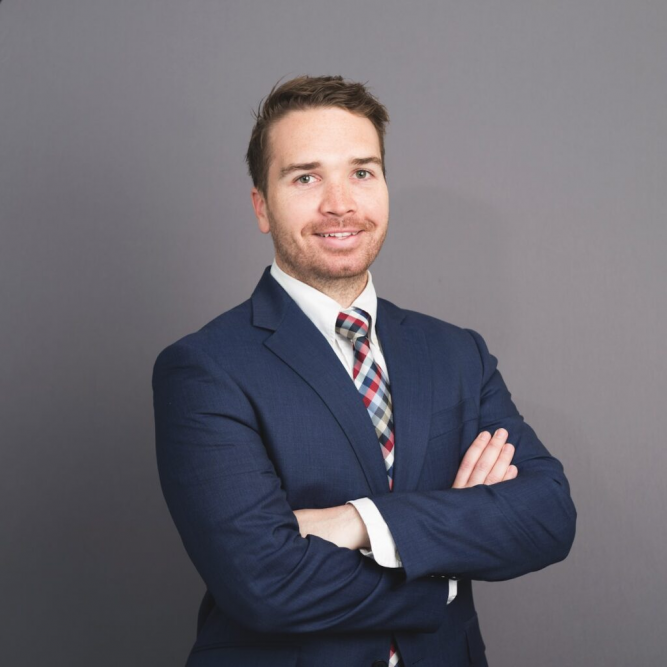
Scully RSV Chief Financial Officer, Mitchell Kilkeary. Image: Scully RSV.
This situation has afforded Mitchell with some unique observations especially regarding the commercial transport segment.
“The market has been really tough for transport providers, particularly for the past couple of years,” he says.
“But I’ve also noticed that the transport industry is very resilient. There are always going to be peaks and troughs — it’s relatively cyclical.”
It’s critical, in light of this, that operators ensure they can persevere through the leaner periods of industry and continue to deliver for their customers observes Mitchell.
“While also being able to extend their capabilities when volumes return and things look optimistic,” he adds.
“Being able to strike that balance is imperative.”
In an increasingly complex freight environment, few operators embody agility and resilience quite like Xtreme Freight.
The Melbourne-headquartered business, a specialist in transport and logistics, has built a reputation on capability, consistency and care.
Under the leadership of Director and CEO Amanda O’Brien, former Chair of the Supply Chain & Logistics Association of Australia, Xtreme Freight delivers a full suite of services spanning air and sea freight, air-side deliveries, taxi-trucks, intrastate and last mile, project cargo logistics and 3PL solutions.
As with many operators across the country, rising input costs are reshaping financial decisions. Tolls and stevedore fees continue to increase, while insurance premiums and industrial property costs add further strain to operating margins.
“The new West Gate Tunnel tolling framework and regular CityLink adjustments are forcing us to rethink our metropolitan routing,” Amanda says.
“We’re focused on network optimisation. Minimising toll exposure while maintaining our service level agreements.”
Other pressures, such as higher wharf interface costs and stevedore / Vehicle Booking System charges from Patrick, DP World, and VICT are being met with technology-led solutions. Xtreme has invested in digital route-planning and compliance tools including Dangerous Goods (DG) compatibility systems developed in-house to streamline planning cycles and eliminate handling errors.
Despite a softer market, Xtreme Freight is finding opportunity in specialisation and customer experience.
“Our national coverage allows us to offer one-contract, five-city solutions,” Amanda says.
“That’s where growth comes from. Being able to deliver time-definite B2B last-mile services and project logistics with consistent service standards nationwide.”
Brown and Hurley Chief Executive Officer, Ryan O’Doherty is the first non-family CEO in nearly eight decades.
Over the last five years the business through the purchase of its ag equipment dealerships and sustained truck sales growth, has gone from a large family business to the size of a serious corporate enterprise.
“The crossover now is to make sure we have systems that can take us from that larger family business into that corporate business but still retain that customer-focus and family feel,” he says.
“How many times do you see businesses, as they grow, put a lot of policies, procedures, systems in place and the number one thing they forget about unintentionally is customers. All these systems might be better for the business but not always for the customer.”
Adopting new technologies when they present themselves, like AI and other integrated digital software, must be balanced with the same propriety that built the business.
“We want to be a forward thinking and cutting-edge business that still supplies that old school family value customer service,” says Ryan.
“No one wants to be another Kodak. So it comes down to a question of balance. How can we serve our customers faster and better without losing the human touch?”
The approach of DDMS providers and systems suppliers, who are wholly focused on AI and chatbots to remove the human element, runs contrary to the values of customer-orientated businesses like Brown and Hurley.
“We don’t want to be systems by robot and all of a sudden the customer feels as though they can’t talk to a human,” says Ryan.
“That’s not who we are. We don’t want to head down that path. We want the smart technology, but it must have a human element. We have customers who are happy to do everything by text message and emails but we’ve also got a lot of customers that still like to come in have a cup of tea with us and shoot the breeze as we discuss various solutions.”
Implementing commercial initiatives, as Mark Muscat views it, isn’t as simple as cutting costs when people are involved.
“It is essential to implement business change in a way that treats all staff with respect,” he says. “If that doesn’t happen, the initiatives are less likely to be successful.”
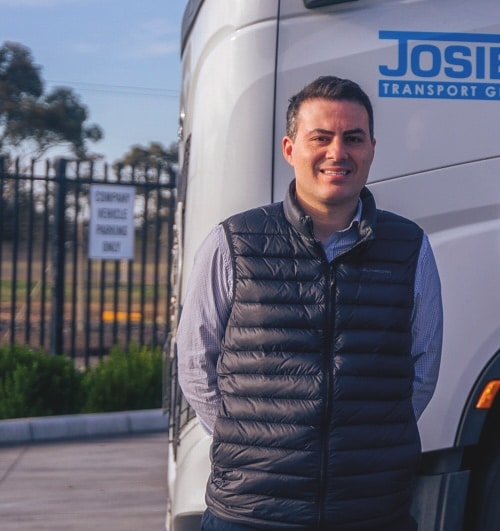
Mark Muscat, Josie’s Transport Group CFO. Image: Prime Creative Media.
Throughout his eight-year tenure as CFO at Josie’s Transport, Mark has guided the business through numerous changes reflecting wider trends in the road transport industry.
One of the most transformative, he says, has been the rapid development and uptake of technology across the industry.
“The accessibility of technology has been the biggest shift I’ve seen in the industry,” he says.
“When I was at Toll, most transport companies didn’t have electronic booking and dispatch systems. Now, everyone has some version of these tools — it has completely changed the industry.”
According to Mark, the ubiquity of this technology amongst operators has now levelled the playing field quite considerably.
“Previously, if you were trying to sell your services to customers, technology could be used as a point of difference to your competitors,” he adds. “Now, you need technology to simply be in the game. It is extremely challenging to succeed as a transport company without these systems.”
Furthermore, Mark believes the burgeoning uptake in online brokerage platforms is leading to some customers using price as their sole criteria when choosing their transport provider, and this has the potential to create negative consequences on the freight industry.
“It’s now so much easier for buyers to compare the prices of different transport companies, and since brokerage platforms remove the relationship between the carrier and the customer, consumer choice is increasingly being driven by price,” he says.
“This has the potential to create negative consequences for our industry if operators unsustainably undercut each other to secure work — operators may resort to sham contracting, shortcuts on repairs and maintenance, or compromising on their compliance in order to be profitable. It’s a huge risk.”
Despite current market struggles, Mitchell is seeing optimism return to some parts of the industry.
“Things are starting to look up, particularly due to recent interest rate cuts by the Reserve Bank of Australia,” he says.
“In Queensland and New South Wales in particular, some operators seem to be returning to growth and opportunity. I guess there’s an underlying theme here, that transport is going to be up and down, so you just need to be close to your customers and support them.”
To Mitchell, this soon-to-come operator optimism in the industry will be augmented by the rapid uptake of digitisation.
“Digitisation is fast-approaching,” he says. “If you take a look at what transport operators are particularly doing with technology, it covers so many bases. Route optimisation, driver safety, temperature controls for specific freight. Operators are leveraging technology, and artificial intelligence to an extent, to ensure they engage in best practice and stay competitive.”
Mitchell says there remains huge opportunity for those who are early adopters of this technology, and those who remain agile in the sector.
“In my time with Scully, I’ve seen many of these agile businesses grow and succeed, by working smarter and adopting technology,” he says.
Automation remains a key pillar of Xtreme’s cost advantage.
“We’ve cut manual route planning from hours to minutes,” Amanda says.
“That’s reduced rework and improved overall utilisation both of which feed directly into cost efficiency.”
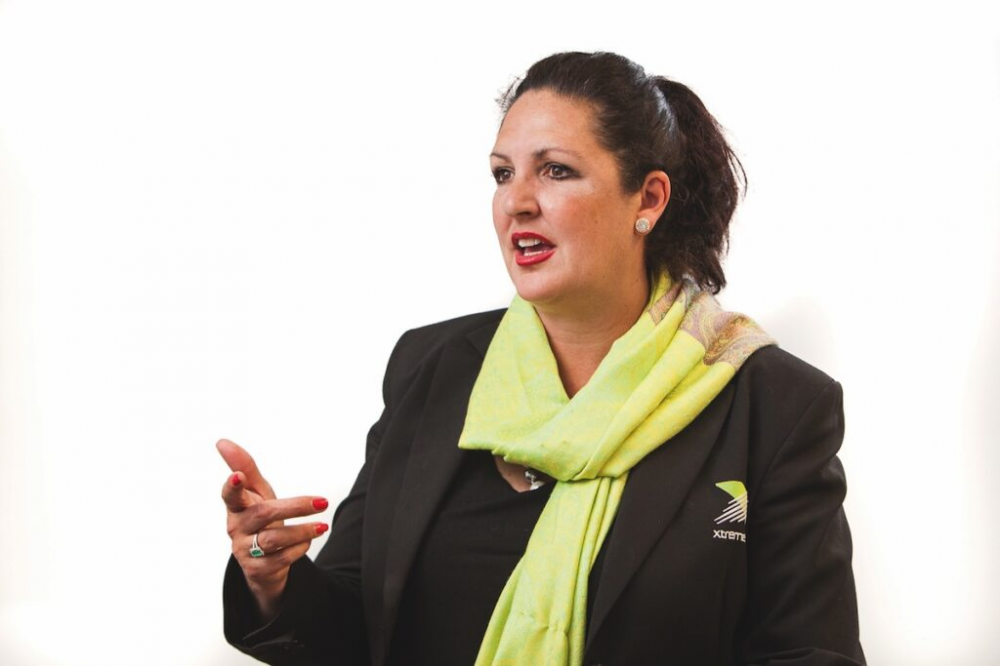
Amanda O’Brien Xtreme Freight Director and CEO. Image: Xtreme Freight.
In the short term, Xtreme Freight is tightening lane economics and repricing selective work to offset toll and wharf cost inflation.
Long-term priorities, however, remain firmly focused on technology and process capability.
Cross-training is embedded across the business, ensuring operational resilience and maintaining the highest service standards. Investment continues in bonded and 3PL infrastructure, while the company’s safety and compliance technology, particularly around Chain of Responsibility (CoR) and under-bond controls, is helping reduce incident costs and strengthen customer confidence.
With an established footprint across all major capitals, Xtreme Freight’s appetite for expansion shows no sign of slowing.
“We’re continuing to build capacity in every capital city and broaden our 3PL network nationally,” Amanda says.
“There’s strong demand for agile, compliant, and deeply local operators who can move quickly and deliver with precision. That’s where Xtreme Freight shines.”
Value-add 3PL offerings such as pick-and-pack and de-consolidation is also helping the business’ customers reduce lead times and improve supply chain efficiency.
The company’s bonded (77G) capability continues to prove to be a competitive edge, allowing Xtreme to handle under-bond freight with fewer touches and lower cost. At Xtreme Freight clients receive a seamless, integrated footprint.
“What truly sets Xtreme Freight apart is our people and our personalised approach,” Amanda says.
“You’re never a number with Xtreme. That care and accountability are what drive our service culture every day.”
At Brown and Hurley, Ryan says they are cautiously optimistic about the year ahead given key sectors like specialised freight, bulk, agriculture and refuse remain active and continue to drive demand for new trucks and trailers.
“Cost pressures are still a factor, but the outlook is supported by a strong pipeline of trucks and improved supply reliability,” says Ryan.
“In Queensland, population growth and major projects linked to the 2032 Brisbane Olympics are creating additional demand for freight and logistics. Upgrades to highways and transport infrastructure, particularly in regional corridors, will make moving goods more efficient and increase activity across the state.”
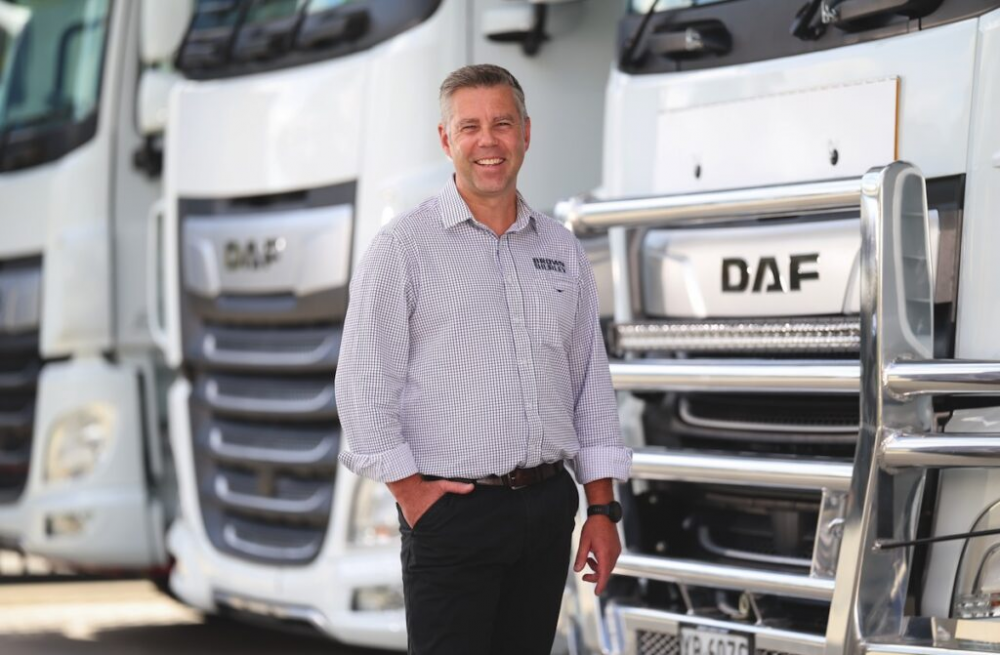
Ryan O’Doherty,
Brown and Hurley CEO. Image: Image: Peter Wallis.
Amanda offers a CFO-level view of how to navigate market volatility given the economic headwinds affecting the landscape at present.
“Price with precision,” she says. “Index customer pricing to transparent external drivers like tolls, terminal fees, and insurance so cost recovery is automatic when those variables change.”
She also stresses the importance of specialisation and flexibility. Specifically, investing in systems that compress planning cycles while keeping property commitments agile in a dynamic industrial market.
Through every challenge, Xtreme Freight’s ethos remains unchanged.
“We never say no,” Amanda says. “It’s not just a slogan, it’s how we operate. Whatever the challenge, we find a way.”
Mitchell has one word of advice for operators looking to stay competitive in the industry — advice that has been informed by his own time with Scully RSV.
“Continue to innovate,” he says. “Use technology, use different financing sources, do it all to ensure your business stays nimble. This will be so important in the next five to ten years, particularly as Australia’s road freight task continues to grow. As long as businesses continue to push the envelope, the entire transport industry will be better off.”
Mark also believes some of these issues threatening efficiency and safety in the industry will be exacerbated by another emerging problem — a lack of talent, and particularly within Victoria.
According to Mark, much of this issue has been fuelled by frequent government contracts taking workers away from the industry itself.
“In Victoria, there has been a lot of infrastructure work going on, and many workers that would otherwise be in the industry are working on these government jobs,” he says.
“I feel this allocation of capital has taken skilled labourers away from our sector, so it’s much harder to find talent these days.
“Additionally, I’ve observed that those currently finishing school and entering the workforce aren’t as resilient as those from previous generations. I think the knowledge of the industry and how it operates – that key frontline experience – is slowly disappearing. And that’s going to become a greater problem over time.”
Despite these major challenges currently facing the industry, Mark has also observed one opportunity that will only continue to grow.
“Demand for transport services is increasing,” he says.
“With the population growth that Australia is currently experiencing, more people are buying things — food, TVs, fridges, you name it. But people need to move those things for them, and that’s obviously where transport comes in. “The industry is growing, and there are opportunities for operators to capitalise on that. In the midst of the issues that the sector is facing, people still need its services.”
Commercial vehicles are a serious investment, and getting truck finance right matters when your livelihood depends on keeping vehicles on the road. Credit One specializes in transport operators and understands what you're dealing with. As Australia's best-reviewed finance broker with 3,000+ Google reviews from operators nationwide, they've proven the approach works. Check out Credit One reviews to see for yourself, then use the loan repayment calculator to understand your options.